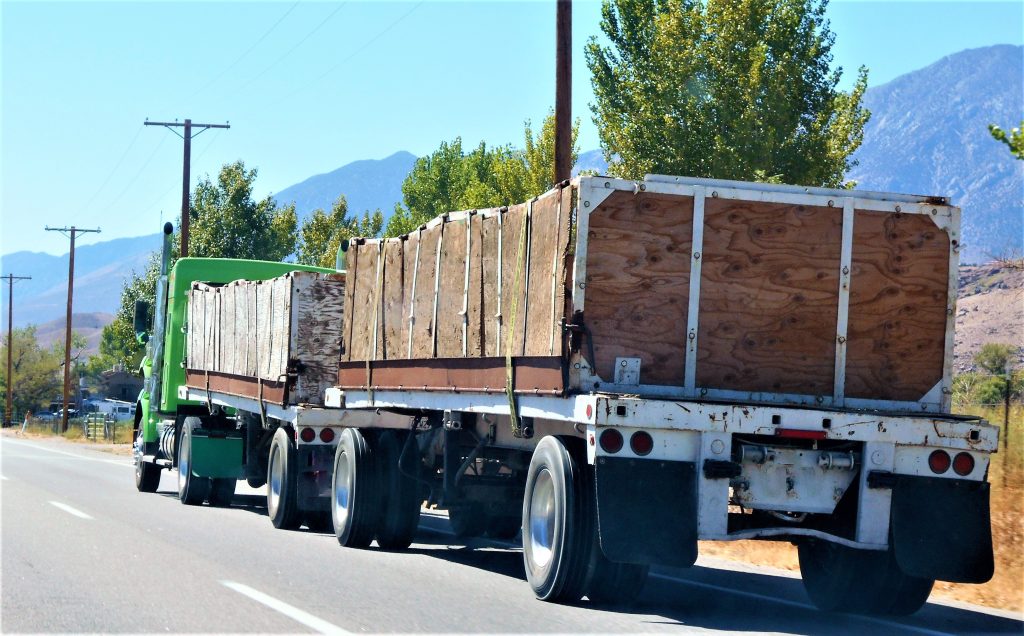
Adjusting the axles on your trailer is a surefire way to get the proper weight distribution needed to safely carry your load. It is important to start with the 41-inch mark between the axles, as that is where the weight needs to be evenly distributed across the trailer for safety and performance.
After you’ve established the correct distance, you may need to reposition the axle. If you notice that one end of the trailer is excessively heavy, consider moving the axle closer to that end to balance the load. Additionally, if the axle is too far forward or back, adjust its position accordingly.
Each pin at the bottom of the trailer can support about 250 lbs. While you can shift the axle forward or backward, always begin at the 41-inch mark. Many states, especially in the western U.S., like California, Oregon, Montana, and Idaho, follow a regulation known as the bridge law, which mandates that the axle position is around the 41-inch mark.
When moving the tandems from the 41-inch mark toward the rear, you decrease the weight on the tandems and increase the weight on the tractor. This adjustment is similar to the mechanics of a seesaw, where the 41-inch mark serves as the pivot point. Always remember that each time you adjust the axle, you need to account for a 250lb change in weight.
If a trailer has been parked for an extended period, it may deplete all the air from its system, including the airbags, brake chambers, and tanks. Therefore, when connecting to the trailer, you should charge the system and allow the truck to release any excess air. Here’s how to do that:
First, charge up the system by pushing the red button, which sends air to the trailer and fills the four airbags, brake chambers, and two tanks. You’ll notice the gauges drop, and it will be necessary to refill them to the specified level. The axles can only slide when there is enough air pressure to separate the pins.
When the pressure reaches 120 psi, you’ll hear a blow-off from the tractor, signaling that the compressor has turned off. Next, pull out the red button to release all the air while still keeping air in the chamber to allow the valve to open. After pulling the button, head back to the trailer and pull the plunger; with air still in the chamber, it should release. If the truck feels a bit heavy and the plunger doesn’t release, return to the tractor and gently wiggle it back and forth.
A small amount of movement is often enough for the pins to disengage. You can then shift the axle forward or backward to help balance the weight.
To shift the axle, I moved it backward, engaging about four pins in the process. If you’re redistributing 1,000 lbs, count out four pins and mark them in the direction you want to move the bogeys—either forward or backward—so you can stop at the correct position and ensure even weight distribution.
Once the necessary adjustments are made, it’s important to lock the axle in place by pushing the pin in! This ensures the axle remains securely positioned. If the pins aren’t releasing as they should, don’t be concerned; simply return to the truck and give it a gentle forward or backward jiggle. This slight motion typically helps the pins to latch back into place.
The entire process is straightforward and doesn’t require excessive force. A gentle motion is all that’s necessary for the desired outcome. After securely locking the axle, make sure to count how many pins you’ve moved for your own records. This practice aids in accurately tracking any adjustments made.
While you’re adjusting, it’s a great time to check the condition of the axles and tires. Be sure that both are in good condition and that the tires are properly inflated, as these factors can also influence weight distribution and overall towing performance.
Once you’ve made your adjustments, it’s essential to recheck the weight. Go back to the scale to confirm that everything is within the acceptable limits. For instance, if your tractor is initially overweight by 1,480 lbs, with a maximum allowed weight of 3,400 lbs, you might move the trailer axle six pins forward toward the truck. This adjustment is likely to shift about 500 lbs from the tractor to the trailer.
By carefully monitoring these adjustments and their effects on weight distribution, you can ensure that your vehicle complies with weight regulations while maintaining safe handling on the road. Regular checks and careful movements are crucial for effective weight management in any towing scenario.
One of the best things that you can do for your vehicle with respect to preventive maintenance is to partner with professional diesel repair services, such as what our professionals here at I-55 Truck and Trailer Repair provide. You can be sure that, with regular maintenance and on-time repairs, your diesel engine is going to run well and be efficient. Our technicians are trained to locate and repair just about any problem that can occur with diesel engines so you can keep your vehicle safe and reliable on the road.
That gives you professional expertise and new equipment for servicing diesel repairs, ensuring greater precision in diagnostics and faster repairs to give your truck a longer service life. It also means you will avoid costly breakdowns and save money to keep your business rolling by having them serviced regularly.
Remember, proper weight distribution is very important, not only in terms of measurements but also for the sake of safety on the road due to you and others around it. The peace of mind involved with taking care of the essentials could result in a smoother towing process and extend the life of your trailer and vehicle.
We at I-55 Truck and Trailer Repair serve all your needs, and our main goal is to keep your truck at its best. You can be assured that your truck is in capable hands when you deal with us. Remember, proper maintenance of your truck will not only increase your productivity but also reduce fuel consumption and lower emissions—benefiting not just your pocketbook but also the environment.
Contact us today at (870) 635-4003 and schedule our professional maintenance services!