Most everything connected with driving today has to do with the smooth operation of your truck’s driveshaft; that is why you need to ensure proper functioning of this important component. As experts in repairs for semi trucks, we have seen that identifying driveshaft problems before they become too damaging can save you from a significant monetary and risky situation.
Truck owners and fleet managers must know the points of failure of driveshafts for the sake of safety and productivity concerns. Properly maintained driveshafts provide efficient running on the trucks, whereas faults can lead to serious operational problems.
Keep reading for lead signs that can tell you when your driveshaft needs attention. By knowing these warning signs, you can keep your truck performing at its best and escape the hassle of unexpected breakdowns.
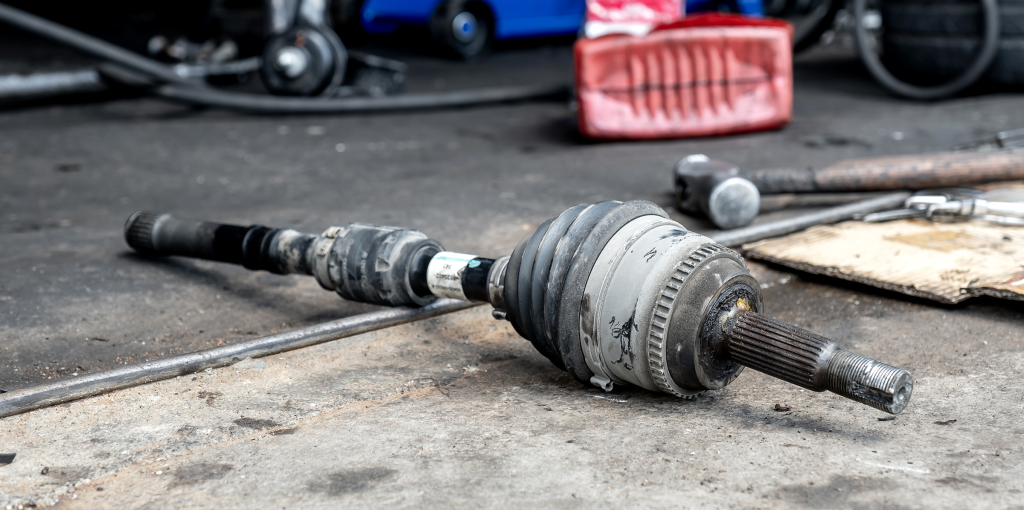
Then get to know something about driveshaft and importance of driveshaft in trucks. In your truck, driveshaft is a component that is very critical in the power transmission system. It links the engine to the wheels so power from the engine can reach the wheels directly allowing forward movement.
This is even further proved in larger trucks such as eighteen wheelers and heavy-duty vehicles in that: They need to carry loads of heavy cargo which requires more torque or catalytic rotational force to be applied. They also have to be driving considerable distances where performance becomes a critical factor.
The power needs to be distributed across multiple axles (wheel sets) for better control and stability. When the driveshaft is in a proper condition, it makes sure that the force from the engine flows smoothly to the wheels keeping the stability while driving and the capability to handle weight in a proper way. In case of any defect in the driveshaft, it does affect the performance of a vehicle as well as its safety on road directly.
The Main Signs That A Driveshaft Is About To Fail
The driveshaft of your truck sends unmistakable signals that give an alert whenever it calls for attention. Monitoring these signs early could save you some money in repairs and keep your truck running safely down the road.
1. Excessive Vibrations
Strong vibrations felt through your truck’s floor or steering wheel are the most significant indicator of possible driveshaft troubles. These vibrations aren’t subtle- they are quite distinct to ignoring.
Usually, there are two main reasons for these whopping vibrations:
Worn Universal Joints: Universal joints give way to uneven movement of the driveshaft. This uneven motion translates into vibrations you’ll feel in the whole truck cabin.
An Imbalanced Driveshaft: The drive shaft would wobble during its operations when an imbalance occurs. Out-of-balance driveshaft creates vibrations all through your truck’s drivetrain systems.
These vibrations dull and often become pronounced as your truck accelerates. A truly failed driveshaft is an aggravation not only for driving comfort but also for vehicle control, creating large vibrations at highway speeds. Such vibrations could become worrying for 18-wheeler operators, as they affect the whole stability of the truck and its load.
Pro Tip: New or unusual vibrations in your truck should not be disregarded. Any minor tremor could magnify into a serious mechanical issue.
2. Shuttering Acceleration
Acceleration in trucks should progress smoothly and steadily. If you ever feel something shaking or wobbling on acceleration, that means the driveshaft requires inspection. This alarming symptom could indicate two reasons:
Loose Universal Joints: With time, universal joints may work themselves loose, causing a disconnection in the drivetrain to be upset.
Bad center bearings: Faulty center bearings would not support the shaft correctly, thus erratically moving it.
When shuttering occurs, it is intensified at relatively high speeds. So much instability can hinder the pickup truck’s performance, and a good chance of compromising control makes it unsafe while carrying.
The driveshaft transmits power smoothly to the wheels from the engine, and when it is in perfect working condition, any shuttering happens, which interrupts that process, causing the added burden on the other members.
3. Unusual Noises from the Driveshaft Area
Your truck’s driveshaft can communicate potential issues through distinct sounds. Listen for these specific noises that signal trouble:
They are Squeaking Sounds. It usually announces dry universal joints screaming out for lubrication. This high-pitched clamor becomes even louder when accelerating or turning.
Clunking Noises: These are heavier metallic sounds indicating that the universal joints have now developed excessive play, all worn out. You might hear these sounds while shifting gears or while changing drive modes.
Rattling Noises: A loose or damaged component in the driveshaft can generate repeated rattling under the truck. With an increase in speed, these sounds persistently get louder.
Quick identification of these ear-splitting sounds helps avert more severe damage to your vehicle’s drivetrain system. Each noise denotes a singular problem that requires addressing straightforward maintenance items like lubrication to part changes.
4. Problems with Steering Difficulty and Handling.
When the driveshaft fails, your truck will have bad maneuverability. The moment the steering gets sluggish or not responsive that would be a very serious warning that should be addressed immediately. Your truck suddenly feels like the drive is difficult to control regarding the response of steering- a lot more when turning or changing lanes.
The steering difficulty associated with 18-wheelers and heavy-duty trucks carrying heavy loads is especially dangerous. The weight increases stress on an already damaged driveshaft, thereby contributing to hazardous driving conditions.
Key handling issues to watch for:
- Resistance when turning the steering wheel
- Delayed response to steering inputs
- Unstable handling during highway speeds
- Reduced control during tight maneuvers
- Inconsistent steering feedback
These maneuvering issues adversely affect your ability to operate your truck safely, especially in situations of heavy traffic or severe weather. Compromised steering and heavy loads are a deadly combination that poses a major safety threat to the driver and the public at large.
Driveshaft Preventive Maintenance Tips
Regular maintenance is the best form of defense against driveshaft failure. Proper lubrication of all components is the primary way to extend the life of driveshafts, particularly the universal joints. Here is a quick guide to driveshaft maintenance for your truck:
Regular Lubrication Schedule
The mechanism that maintains optimal performance and lifespan of the truck driveshaft involves a proper schedule for lubrication. Universal joints should be checked and lubricated within the range of every 5,000-8,000 miles based on the environment in which the truck has been operating and the original equipment manufacturer’s recommendations. Every time servicing is done, grease gets pumped into the joint until it oozes out from the seals, indicating that settling occurred. Only high-quality grease is administered for heavy-duty applications, providing maximum wear protection and friction reduction and preventing premature failure of the components. Regular attention to lubrication will not only prolong the driveway but also lower the chances of unexpected roadside breakdowns.
Inspection Routine
Check for bolt-tightness; check for loose or worn components; listen for unusual sounds when the truck is in operation; and observe for signs of rust or corrosion during every service. Additionally, test for excessive play in the universal joints.
Having a properly maintained greasable driveshaft can contribute to maintenance cost reduction while preventing sudden breakdowns. Your maintenance schedule may call for changes based on working conditions working in dusty environments or carrying heavy loads are in need of servicing sooner.
When to Seek Professional Semi Truck Repair Services
Your truck’s driveshaft issues need professional attention when:
Is often compounded with several diagnosable conditions: vibrations, noise, uncomfortable handling, and the like might have various causes. Technicians are very skilled specialists and use uncommon tools to exactly isolate the cause and prevent further misdiagnoses.
Safety-one Driveline Repairs: Driveshaft failures in 18-wheelers are very dangerous. Technicians know how singularly complex the relationships among all the components of the drivetrain are and are able to identify the onset of all potential problems before they mature into a safety hazard.
Requires specialized tools: Many driveshaft repairs require specialized tools and equipment that are not readily available to a casual truck owner. A professional repair service has the right tools to do the job right.
Here at I-55 Truck & Trailer Repair, diagnosis and repairs to driveshafts are undertaken by trained technicians with the best diagnostic equipment. Whatever it is, from universal joint replacements to full driveshaft rebuilds, we do everything to get your truck back on the road safely and efficiently. For assistance, call us at (870) 635-4003.
Your truck’s driveshaft, which lies under the truck, provides safety while driving on the road. Inspection or repair jobs on the driveshaft qualify not only as maintenance measures but also as investments for the vehicle and the safety of its driver.
Don’t allow little troubles to escalate into big issues; rather, contact our team today for expert driveshaft inspection and repair services. Your truck’s driveshaft is central to providing a driving experience that flows seamlessly. We have seen semi trucks and diesel repairs. We know signs of such problems save a lot of bucks as well as dangerous situations.
It’s important for truck owners and fleet managers to know the warning signs of driveshaft failures for safekeeping as well as efficiency. It provides smooth driving in an optimally running truck, while the faulty driveshaft can cause serious operational problems.
Read on for some of the major signs that suggest your driveshaft may be in need of attention. Knowing them will help keep your truck running at its best and prevent those sudden breakdowns.
What The Driveshaft Is and its Functions in Trucks
Your truck’s driveshaft is that crucial component of the power-transmission system in the truck. It connects engine and wheels, and this direct hook-up makes it quite easy for the truck to move forward since the power generated at the engine head goes straight to the wheels.
In fact, the driveshaft takes greater importance compared to smaller trucks such as 18-wheels and heavy-duty vehicles because:
More torque is required by the heavy load that needs to be moved (rotational force).
Long-distance travel also requires these trucks to move consistently over a long time.
Power needs to be distributed across multiple axles (wheel sets) for better control and stability.
If all is well, the driveshaft makes sure that the engine’s power is delivered smoothly to the wheels, thus enabling smooth driving and handling heavy loads with consummate ease; if otherwise, then performance and safety of that vehicle are directly compromised.
Major Signs of a Failing Driveshaft
Signs from your truck’s driveshaft will manifest loud and clear once they require your attention. Early recognition of these warning signs will save you a fortune in repairs and keep the truck nice and safe on the road.
Strong Vibrations
The most apparent symptom of a driveshaft failure is a number of very clear unmistakable vibrations that can be felt in the floor or steering wheel of your truck. There are no subtle signs here; there are distinct and hard-to-miss vibrations.
Almost entirely, two sources of excitation would be the causes for these annoying vibrations:
Worn Universal Joints
With the failure of universal joints, wrong movements occurring in your driveshaft can be passed to vibrations that you will experience into your truck cabin.
An Unbalanced Driveshaft
A lost balance driveshaft creates wobbling movements while running. This, in turn, transfers vibrations throughout the entire drivetrain system in your truck.
The magnitude of these vibrations is usually higher with increasing truck speed. While at highway speeds, a defective driveshaft may well be capable of causing really large vibrations that can interfere with comfort and control of a vehicle. For 18 Wheel Operators, such vibrations are very disturbing as they can affect the stability of both truck and load.
Pro Tip: Just be attentive and careful with any newly formed or unusual truck vibrations. What could be a minor tremor can escalate quickly into a major mechanical issue.
Shuddering While Accelerating
Accelerating in a truck feels smooth and steady, but you’ll begin to feel something is off if there’s shaking or wobbling as you speed up. It’s time to bring that driveshaft into view. This concerning symptom points to two main culprits:
Loose Universal Joints: These crucial components can work themselves loose over time, creating an unstable connection in your drivetrain
Deteriorating Center Bearings: Bad center bearings fail to provide proper support, causing the driveshaft to move erratically
Increased shuttering intensity might cause discomfort or worse, danger, for you on your ride. The performance of the truck is equally affected by this instability, which puts control of the vehicle at great risk, especially during a journey carrying heavy loads.
Assuredly, a healthy driveshaft will convey the engine’s power smoothly and evenly to the vehicle wheels. Shuttering disrupts that smooth transition of power and puts extra stress on other components interrelated with it.
Unusual Noises from the Driveshaft Area
Your truck’s driveshaft can communicate potential issues through distinct sounds. Listen for these specific noises that signal trouble:
Squeaking Sounds: A telltale sign of dry universal joints crying out for lubrication. This high-pitched noise typically becomes more noticeable during acceleration or when making turns.
Clunking Noises: These deeper, metallic sounds point to worn-out universal joints that have developed excessive play. You might hear these sounds when shifting gears or changing drive modes.
Rattling Sounds: A loose or damaged driveshaft component can create persistent rattling noises underneath your truck. These sounds often intensify with increased speed.
Quick identification of these sounds helps prevent more serious damage to your truck’s drivetrain system. Each noise represents a specific issue that needs attention – from simple maintenance like lubrication to component replacement.
Difficulty Steering and Handling Issues
When a driveshaft starts to malfunction, it really has quite extreme changes to the maneuverability of a truck. When your steering becomes slow or completely unresponsive, it should alarm you right there and prompt you to get professional help as soon as you can. Your truck may also feel more difficult to handle when turning and lane switching.
Such steering complications can make it quite hazardous for the 18-wheelers and heavy-duty trucks which haul the largest of loads. The additional tons manipulate an already weak driveshaft, creating the risk of driving under hazardous conditions.
We know for sure that your sentences can be more complex than the above statements. Go on, try breaking the text into bullet points with semblance. Update the heading and keep modifying the last elements according to your needs. This should look good for paragraphs.
Key handling issues to watch for:
- Resistance when turning the steering wheel
- Delayed response to steering inputs
- Unstable handling during highway speeds
- Reduced control during tight maneuvers
- Inconsistent steering feedback
These problems of handling will be affecting directly your ability to drive the truck in a safe manner especially in cases of heavy traffic or severe weather conditions. This reduces steering effectiveness under heavy loads, creating very unsafe conditions for the driver and other road users.
Preventative Maintenance-Tips Drive Shaft for Longevity
The best treatment here is regular maintenance of the drive shafts to prevent driveshaft failure. It goes without saying that proper lubrication will go a long way in serving a driveshaft well, mainly in the case of universal joints. Here is a rundown of the driveshaft maintenance need for your truck:
Regular Lubrication Schedule
To give the driveshaft maximum use and life, it must be subjected to regular lubrication. Universal joints should be checked and lubricated at intervals of either 5,000 or 8,000 miles; any will depend on one’s environment of operation and the manufacturer’s recommendations. Each time at service, grease is applied until there is a seepage coming from the “seal”, indicating that parts have been covered for a full application. It is advisable to use heavy-duty grease because it gives maximum protection against wear, friction, and premature failure of components. Much better, regular attention to lubrication will extend the effective life of driveshafts while minimizing the chances of sudden breakdowns on the road.
Inspection Routine
Check for loose or wear components during each service, listen for any noises unusual during operation, and look at the equipment for signs of rust or corrosion. Check also for excessive play in universal joints.
A well-maintained greaseable driveshaft can greatly prevent repair expenditure and sudden breakdowns saving on cost. Your maintenance schedule may need adjustment based on your operating conditions. Trucks operating in dusty environments, or those carrying heavier loads, require increased servicing.
When to Seek Professional Semi Truck Repair Services
Your truck’s driveshaft issues need professional attention when:
The approach to diagnosing is complicated: Vibration, noise, or handling problems can arise from various causes. Highly skilled technicians can use highly technical diagnostic tools to pinpoint problems properly and avoid misdiagnosis.
Vital repairs for safety: A drive shaft failure in an 18-wheeler is a safety hazard. Expert technicians know the interrelationships of the various components of the drivetrain and can recognize potential problems before they become a safety hazard.
Special tool requirements: Many driveshaft repairs require tools and equipment that the average truck owner does not have access to. The professional repair service will have the right tools for the right repair.
Choose I-55 Truck and Trailer Repair
We at I-55 Truck and Trailer Repair technicians use advanced diagnosis tools to pinpoint and correct driveshaft problems. We do anything from replacing universal joints to completely rebuilding driveshaft assemblies, ensuring that your truck is safely and mechanic-worthy on the road.
Your truck’s driveshaft is essential for your safety on the road. Routine checks and timely repairs are more than maintenance; they are investments into the performance of your vehicle and your safety out there.
We are committed to helping you identify and repair driveshaft issues before they develop into major headaches. Our experienced technicians are ready to diagnose and repair any and all driveshaft concerns you have.
Keep your truck running smoothly. Contact us at (870) 635-4003 for dependable diesel repair services in:
- Crawfordsville AR
- Marion AR
- Memphis TN
- West Memphis AR
Don’t let minor issues escalate into significant problems—contact our team today for expert driveshaft inspection and repair services.