Safety and comfort are things of paramount importance whenever you are seated in the driver’s seat of your semi truck. For long-hour drives, working A/C is something more than an amenity. In fact, with malfunctioning A/C, the cabin of your truck becomes uncomfortable; it spoils your concentration, and long hauls become miserable. You’ve likely experienced various A/C issues, from weak cooling to complete system failures, and we understand how challenging that can be.
Common signs your truck’s A/C needs attention:
- Warm air blowing from vents
- Unusual noises from the A/C system
- Inconsistent cooling performance
- Strange odors when A/C is running
Here’s what you should know: fixing A/C issues early on can avoid large component failures and expensive repairs. We’ll walk you through the most important components to inspect, the usual issues to be aware of, and when to call in a pro. Our objective? To make you more familiar with your truck’s A/C system and keep you chilled on those sweltering days driving.
Understanding Common A/C Problems in Semi Trucks
Your truck’s A/C system gives clear warning signs when something is wrong. Catching them early will save you from very expensive repairs and extremely uncomfortable drives.
Main warning signs:
Be on the lookout for several key warning signs that can indicate issues with your A/C system. You should pay attention to weak or warm air coming from the vents, any unusual sounds while the unit is operating, strange smells from the system, uneven cooling in different areas, and the presence of water spots or moisture in the cabin.
Time is critical when it comes to A/C problems. A small leak today could lead to a complete system failure tomorrow. When your A/C runs low on freon, it forces other components to work harder, triggering a chain reaction of issues.
Why Quick Action is Important:
It’s essential to act promptly because low freon levels can place extra strain on your compressor, and moisture buildup may lead to internal corrosion. Additionally, metal shavings from worn parts can circulate in the system, and problems with belt-driven accessories, like alternators, may arise if the compressor seizes up.
A seemingly minor A/C issue can escalate into major component failures if left unchecked. When your system stays open and exposed to the elements, moisture enters through the same paths where freon escapes. This moisture creates corrosion inside your aluminum components, particularly affecting delicate parts like compressor pistons.
The risk multiplies during seasonal changes. Temperature fluctuations between hot and cold weather can accelerate damage to an already compromised system. What starts as a simple repair can quickly turn into a need for complete system replacement.
Key Components to Check When A/C Is Not Working
Your truck’s A/C system relies on several crucial components working together to keep you cool during those long hauls. Let’s examine these vital parts, starting with the condenser – a critical component in your A/C system’s operation.
1. Condenser
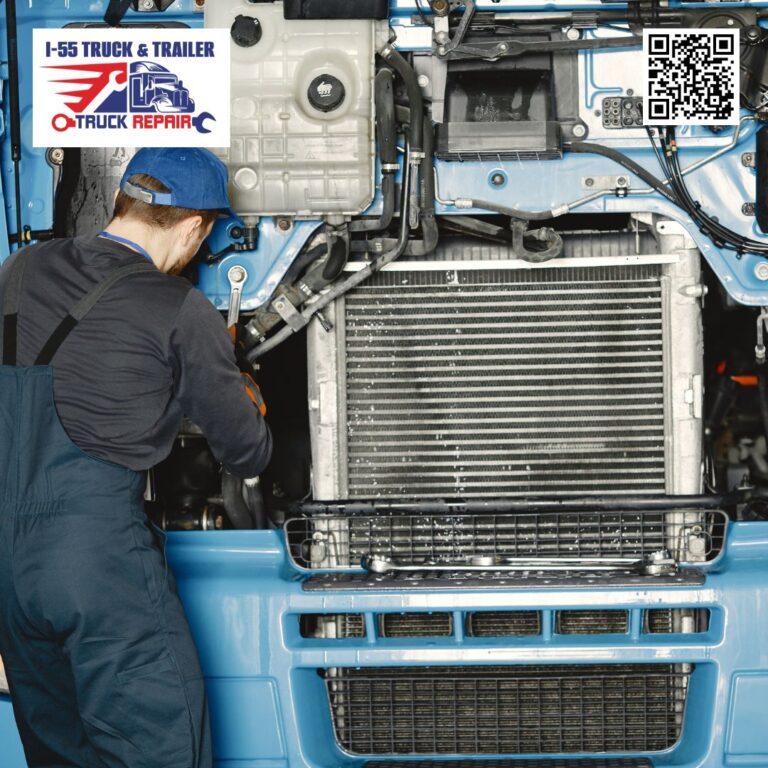
The condenser sits at the front of your radiator, making it the first A/C component exposed to outside elements. This thin, aluminum radiator-like component plays a vital role in the cooling process.
Location:
- Front-mounted, directly in front of the engine radiator
- First component exposed to incoming airflow
- Connected to A/C lines running through the system
Signs of Damage:
- Oil stains near connection points
- Visible damage from road debris
- Bent or crushed fins
- Leaks at line connections
- Corrosion or wear marks where components rub together
Inspection Tips:
- Use a flashlight to examine the condenser thoroughly
- Look for oil residue – a telltale sign of freon leaks
- Check for neon dye traces (if your system uses it)
- Inspect connection points where A/C lines meet the condenser
- Examine for any physical damage from road debris
Important Handling Notes:
- Treat A/C lines with care during the inspection
- Avoid bending or forcing lines into new positions
- Keep lines in their original layout
- Remember these lines operate under high pressure (300+ PSI)
- Consider professional inspection if you spot potential issues
Professional Service Note:
When handling A/C components, professional expertise ensures proper care and prevents additional damage. A qualified technician can perform pressure tests and use specialized equipment to detect even minor leaks that might not be visible to the naked eye.
2. Compressor
The compressor is an important component of your truck’s air conditioner system. It compresses freon through the entire cooling system, just as the heart sends blood throughout our bodies. This part is belt-driven and typically shares the same belt as your alternator. Be sure to pay extra attention to the compressor during maintenance.
Signs of Compressor Problems:
- Unusual noises during the operation
- Damage or wear on the belt
- Insufficient cold airflow
- Oil stains around the compressor unit
- Intermittent cooling
A failing compressor can set off a series of problems. If not addressed, a locked compressor can impact other components that are driven by belts, potentially causing your alternator to stop functioning or misaligning your fan belt.
Important Note for Professional Service:
Your compressor requires specific equipment for proper servicing, such as:
- Tools for evacuating the system
- Devices for accurately measuring freon
- Materials for proper lubrication
Internal aluminum compressor components are especially susceptible to debris and moisture. Properly evacuating air and maintaining proper oil levels during service is necessary to prevent premature failure and ensure maximum performance.
3. Dryer
Your A/C dryer for your truck is a vital component of the system that removes deadly moisture from your refrigerant. It is found close to your condenser and is essential for maintaining your A/C system functioning properly.
Key Functions of the A/C Dryer:
- Captures moisture to prevent internal corrosion
- Filters out debris and contaminants
- Protects other system components from damage
When to Replace Your Dryer:
- After any A/C system repairs
- When lines are exposed to air
- During compressor replacement
- If moisture contamination is detected
The dryer needs to be replaced immediately whenever your A/C system is opened or exposed to air. If you skip this important step, even for a simple line repair, it can cause problems throughout the entire system. Professional A/C service technicians have specialized tools to properly evacuate the system and make sure the dryer works effectively.
4. Expansion Valve
Your expansion valve is like the nozzle on a spray paint can. Just as the nozzle turns liquid paint into a fine mist, your truck’s expansion valve changes liquid refrigerant into gas. This change is essential for making the cold air you feel in your cab.
Location of Expansion Valves in Semi Trucks
Most modern semi trucks have two expansion valves; one in the main cab system and another behind the driver’s seat (for sleeper units).
These valves have service ports marked in red and blue, which allow technicians to check your freon pressure levels. If the expansion valve gets clogged – just like a blocked spray paint nozzle – it can mess up the pressure regulation and stop your A/C from cooling properly.
Pro tip: In case your A/C system was idle for many months, then your expansion valve may be corroded or blocked by debris, which would require a professional inspection and maybe a replacement.
5. Evaporator and Cabin Air Filters
Your truck’s evaporator works alongside cabin air filters to deliver clean, cold air throughout your cab. The evaporator, hidden behind your dash panels, transforms liquid refrigerant into cold air. Think of it as your truck’s cooling powerhouse.
Cabin Air Filter Maintenance
Cabin air filters, often overlooked in routine maintenance procedures, can be located in both the cab and sleeper sections. Once these filters become clogged, dirt can be forced into the evaporator. Potential blockages could be created. For this reason, the filters must regularly be replaced.
Older truck models position the evaporator next to the heater core. This setup can affect cooling efficiency when switching between hot and cold settings, as the proximity allows heat transfer between components.
Access and Service
For optimal access to the evaporator, it is advisable to seek professional services. This procedure requires careful removal of dash panels and is done with specialized tools to facilitate proper installation. It’s also important to watch for torque values during reassembly since improper torque can damage the components.
Maintaining the cleanliness of your cabin air filters shields your evaporator and produces maximum A/C performance. Have us replace them on a routine basis to get maximum airflow and cooling effectiveness.
Final Steps After Diagnosis
A thorough A/C system evaluation requires specialized equipment and expertise. After inspecting all major components, a professional technician, like ours here at I-55 Truck and Trailer Repair will:
- Connect an A/C machine to check system pressures
- Evaluate if pressure readings fall within normal ranges
- Test high/low pressure switches for proper functionality
- Measure current refrigerant levels against manufacturer specifications
When no obvious leaks or component failures are detected, technicians employ advanced diagnostic tools to evacuate and evaluate the current refrigerant levels, comparing the actual amount to the necessary specifications to pinpoint any potential undercharging issues.
Why Professional Service Matters:
DIY fixes like adding refrigerant from store-bought cans can damage your A/C system. These quick fixes trap unwanted air inside the system, force compressors to work harder moving both air and refrigerant, lead to inefficient cooling performance, and risk long-term component damage.
Professional service centers use specialized evacuation equipment to:
- Remove all air from the system
- Add precise amounts of refrigerant
- Include proper lubricating oils
- Ensure optimal system pressure
A properly serviced A/C system by qualified technicians helps prevent costly repairs and ensures reliable cooling performance for your comfort on the road.
Choose I-55 Truck and Trailer Repair
Your truck’s A/C system is crucial for your comfort and safety while driving. If it’s not working properly, it can cause major issues if not fixed. That’s why it’s important to have professionals diagnose and repair the problem to protect your investment and avoid expensive breakdowns.
At I-55 Truck & Trailer Repair, we know how complicated semi-truck A/C systems can be. Our experienced diesel repair services include all types of A/C maintenance and repair, such as checking the condenser and completely overhauling the system. We have specialized tools to properly evacuate, diagnose, and recharge your system—tasks that can’t be done with DIY methods.
Don’t let A/C problems ruin your driving experience or affect your truck’s performance. Get in touch with our team at (870) 635-4003 for expert help. We provide services to drivers in the following ways:
- Crawfordsville AR
- Marion AR
- Memphis TN
- West Memphis AR
Your truck deserves professional care, and you deserve a comfortable ride. Let our skilled technicians restore your A/C system to its best condition.