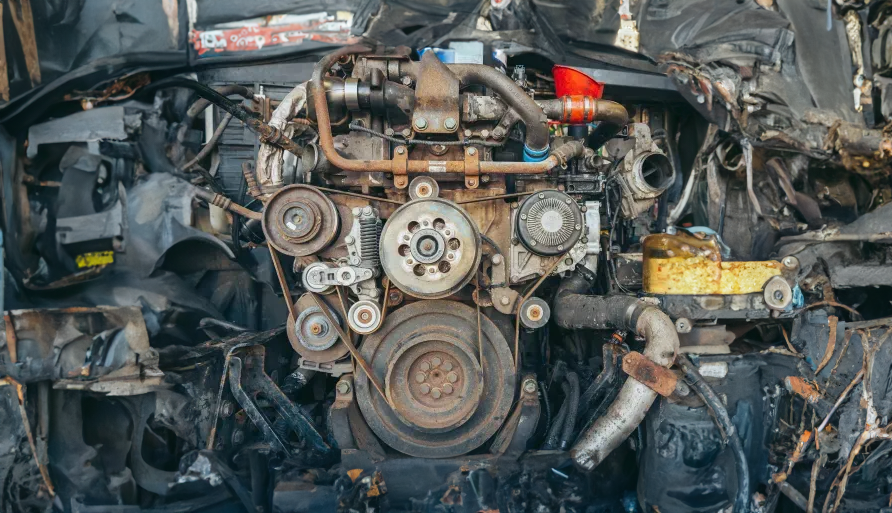
An engine for a semi-truck is an extraordinary engineering marvel that reveals the gradual progress in diesel technology up to now. In contrast to ordinary car engines that are prone to taking a toll, these mighty machines are built to withstand the most demanding conditions and perform wonders.
No matter what your role is, be it an owner-operator, fleet manager, or mechanic, it is imperative that you learn about the semi-truck engine functioning. It gives you the power of knowledge to make wise decisions concerning maintenance, repairs, and efficiency as a whole.
This comprehensive guide will take you through the details of the diesel engine that is the backbone of America’s freight industry. You will learn about its main parts, the systems that support them, and the innovative technologies that allow it to provide power consistently. In addition, we will make the significant dissimilarities between these engines and those in cars evident, and their role in keeping your truck’s performance up to the mark will also be discussed.
The Heart of the Semi-Truck: Diesel Engines
Underneath the modern semi-truck, you will see the engine, which is a power generator for long-distance trucking. It is the inline six turbocharged diesel engine. The market is dominated by top companies like Cummins, Detroit Diesel, Volvo, Caterpillar, and Scania, and every one of them has an engine designed specifically for the hard world of heavy-duty transportation.
The turbines give off the power of the gods and then, in a whisper, the longevity of the Hughes. They are just the jobbers of the hardest and roughest applications. One of the reasons diesel engines are so popular in the trucking industry is their fuel efficiency; they have an efficiency of around 40% compared to about 25-30% for gasoline engines.
Maintenance Costs
The major difference in design between gasoline and diesel engines is that the latter has fewer moving parts. This directly results in longer life spans and less maintenance. A gasoline engine might give up after 200.000 miles, but a properly maintained diesel one will usually last over a million miles.
Power Output
The power output tells its own story. Modern semi-truck diesel engines deliver:
- Horsepower: 400-600 HP (with some models reaching 700+ HP)
- Torque: 1,450-2,050 lb-ft
That torque figure is significantly the most important one when pulling 80,000 pounds up steep hills. Diesel has more energy per gallon than petrol, and the diesel engine’s design is such that it gets the most out of the energy. The inline six configuration gives very good symmetry so that the forces acting on the engine are balanced and the engine is less susceptible to wear while being able to provide power in a smooth and reliable manner. The combination of fuel economy, endurance, and raw strength makes diesel engines the clear choice for the requirements of the commercial truck sector.
Key Components Inside a Semi-Truck Engine Bay
When you lift the bonnet of a semi-truck, you will find an elaborate network of very sturdy parts that have been operating in unison for a long time. Every part has a very important impact on the continuing operation of these mighty machines running mile after mile.
Turbochargers: The Unsung Heroes of Diesel Performance
Turbochargers are the unsung heroes of diesel performance. These precision-engineered units spin at mind-boggling speeds exceeding 100,000 RPM, forcing compressed air into the engine’s combustion chambers. This forced induction dramatically increases the amount of oxygen available for fuel combustion, resulting in the massive torque output your rig needs to haul heavy loads up steep grades. Without turbochargers, achieving the power levels required for commercial hauling would be nearly impossible.
Cooling Systems: Engineering Marvels for Extreme Conditions
The mechanism of cooling in semi-trucks is one of the greatest feats of engineering, of which the thermal loads are absolutely extreme. The radiators on a truck are larger than all the radiators of a car combined, and on top of that, they have a fan that works with hydraulics that can push the air with a strong force. The fan automatically changes its speed according to the temperature of the engine, so there is continuous, very effective cooling, no matter if you are just sitting at a truck stop or pulling a fully loaded truck through the desert’s high temperatures.
Oil and Fuel Filters: The First Line of Defense
Oil filters and fuel filters are contamination’s first line of defense for the engine. Semi-truck oil systems comprise 40-50 quarts, which is about ten times the amount a standard car consumes. The dual fuel filter setup prevents particles and water that could harm the sensitive injector systems from entering with the fuel, while the primary and secondary filters work in harmony to make sure that only the cleanest fuel comes to the engine’s cylinders.
Supporting Systems That Keep Semi-Trucks Running Smoothly
Apart from the engine, the compressed air systems guarantee the smoothness of the truck’s operation. These pneumatic networks operate three crucial functions that compare heavy-duty trucks with their lighter counterparts.
1. Air Brakes: The Indispensable Safety Feature
11Air brakes are the most important safety feature for your semi-trailer trucks. The brakes work with the pumping of air at each of the truck’s wheels, unlike the brakes on passenger cars that rely on hydraulic systems. The brake system usually works with the air pressure of 100-125 PSI, and pressing the brake pedal releases the air that has been stored to activate the brakes. The big advantage of this system is that in case the air pressure goes down due to a leak, the spring-loaded parking brakes are engaged, and this prevents the trucks from running away. The fail-safe aspect of the air brakes has made them a necessity in the case of trucks carrying loads of up to 80,000 pounds.
2. Air Suspension: Adapting to Varying Loads
The air suspension system changes the way your truck interacts with different loads. The traditional leaf springs are replaced with air-filled bags, which are adjustable and allow you to set the ride height and stiffness according to the weight of the cargo. An empty trailer will smooth the ride, while a fully loaded trailer will be properly supported and stable.
3. Transmissions: Enhanced Gear Changes with Pneumatic Support
Transmissions are another area where compressed air plays an important role. Air-operated shifting devices make it possible to change gears faster and with more accuracy than would be possible with mechanical linkages alone. This kind of support saves the driver from getting too tired on the road, and at the same time, it makes the power transfer smoother, especially when dealing with the huge amount of torque generated by the diesel engines.
Modern Technology Integration in Diesel Engines
When you open the door of a contemporary semi-truck cab, you are actually coming into a mobile supercomputer. The modern diesel power plants work with highly advanced engine control units (ECUs) that are constantly checking and changing hundreds of parameters every millisecond. These units are digital brains, which detect the most favorable moments for injecting the fuel, regulate the emissions like a champion, and maintain the truck’s superb performance along with compliance with the hard environmental laws.
How ECUs Work
The network of sensors throughout the engine bay feeds real-time data to the ECU. Here’s a breakdown of some key sensors and their roles:
- Fuel pressure sensors ensure precise injection timing
- Turbo boost sensors monitor forced induction levels to prevent over-boosting and potential engine damage
- Temperature sensors track coolant and oil conditions
- Oxygen sensors optimize combustion
- Mass airflow sensors measure incoming air volume
This constant stream of information allows the ECU to make instant adjustments that maximize power output while minimizing fuel consumption.
The Impact of Diagnostic Ports
Diagnostic ports have revolutionized how we approach semi-truck repair. The ports play a crucial role when something goes wrong, as they provide technicians with instant access to fault codes and performance data through the specialized equipment that they connect. Instead of spending hours troubleshooting, we can quickly get to the core of the issues, which range from a faulty sensor to emissions system problems. This characteristic of being able to diagnose has a significant impact on repair time and also helps to prevent minor issues from getting turned into major breakdowns on the road.
Durability and Maintenance Considerations for Semi-Truck Engines
Semi-truck diesel engines can be regarded as the triumph of engineering because they are made to last and endure even the harshest conditions that would simply destroy the powertrains of the average passenger car. Besides, these beasts regularly go beyond a million miles of service life, with some even half a million being operated under conditions requiring major overhauls. The secret is in the philosophy of their design: fewer moving parts than in gas engines mean fewer possible failures. So a rugged build using strengthened blocks, crankshafts made by forging, and bearings of industrial strength makes an engine that can withstand constant high-load operations even without a break.
This impressive longevity doesn’t happen by accident. Regular maintenance serves as the foundation for reaching those million-mile milestones. Your engine demands consistent attention to several critical areas:
Oil changes at manufacturer-specified intervals (typically every 25,000-40,000 miles for modern synthetics)
Fuel filter replacements to protect injection systems from contamination
Air filter servicing to maintain proper combustion and turbocharger health
Coolant system flushes prevent corrosion and maintain optimal operating temperatures
The professional diesel repair services are a must for your investment to be maximized. The skilled technicians discover the possible problems, and they are not expensive at all, thus making it easy for the truck to earn money instead of being in the repair bay. Certified semi truck repair centers that carry out regular preventive maintenance can reduce unexpected breakdowns by 70%, thus directly affecting your profit through less downtime and longer component life.
To understand the importance of semi-trucks in logistics, one must look at their performance. When you read the specification sheets, you might still not grasp the ubiquitous presence of these giant machines, but if you could visualize the equivalent weights, that would be easier to perceive. The USA’s interstate transportation is the most significant player in the world’s economy, as it has the strongest economy.
Online shopping, local supermarket stocking, and gas station fuel availability are all dependent on these powerful diesel engines operating nonstop. The truck does not come to rest at the end of the day after a long trip; instead, it keeps rolling for several days, covering distances of thousands of miles with pauses only for the driver to rest and refuel. This endurance is exactly why we focused on the robust design and sophisticated systems in previous sections.
The freight transport industry moves approximately 71% of all goods in the United States, and semi trucks are the workhorses making it happen. Every day, these vehicles deliver:
- Fresh produce and refrigerated foods for grocery chains
- Medical supplies to hospitals and pharmacies
- Construction materials to building sites
- E-commerce packages from distribution centers to your doorstep
- Fuel to service stations across the country
The union of strong diesel engines, sophisticated cooling systems, and dependable air brake technology allows the big rigs to keep their high-priority schedules and, at the same time, move critical goods that are essential to the survival of the communities in a safe manner.
Choose I-55 Truck and Trailer Repair
The comprehension of the true image of a semi-truck engine helps not only to realize but also to marvel at the engineering in America that supports the movement of goods in a whole country. The powerful inline-6 diesel engines and the very sophisticated electronic systems that monitor every aspect of the performance are indeed the HEAVY DUTY vehicle technology.
It is self-evident that when your trailer truck gets sick, you want only a doctor who knows every single issue that we have discussed in this guide very well. I-55 Truck and Trailer Repair is a name synonymous with expert diesel and semi truck repair services in the areas of Crawfordsville, AR, Marion, AR, Memphis, TN, and West Memphis, AR. The experts of our team are very familiar with these engines-from turbochargers moving at mind-boggling velocities to the intricate ECU systems that are constantly balancing emissions and performance.
You may need nothing but a regular maintenance service, including oil and filter changes, or, on the contrary, a very complex repair dealing with fuel systems and turbochargers; we are there for you. For reliable maintenance or complicated repairs that ensure your fleet’s safe and efficient operation, reach out to us at (870) 635-4003. Engage our diesel repair services expertise to reduce your engine’s downtime and enhance its life span.